- Про Модель ООНКомитетыУчастие
- Про Модель ООН
United Nations Office on Drugs and Crime
The United Nations Office on Drugs and Crime (UNODC), a UN agency headquartered in Vienna, Austria, with 21 field offices, is dedicated to combating drugs and transnational organized crime. Its main functions include research, promoting the adoption of laws and treaties against crime and drugs by governments, and providing technical assistance to them. Formed through a merger with the United Nations Drug Control Programme (UNDCP) in October 2002, it has been crucial in resolutions such as the United Nations Convention against Transnational Organized Crime, which addresses trafficking in persons and firearms. UNODC is funded 90% through voluntary contributions, primarily from governments.
Agenda: Legal protection of children recruited and exploited by terrorist groups and development of comprehensive rehabilitation, reintegration and legal assistance programs
Dear Delegates,
I am delighted to welcome you to our Model United Nations conference!
From the Middle East to Africa and South Asia, thousands of children are recruited and exploited by terrorist groups. They are used as fighters, spies, couriers, and even suicide bombers, deprived of their childhood, education, and security. Yet liberation from a terrorist group does not necessarily mark the end of their suffering: psychological trauma, social stigma, and limited opportunities often stand in the way of their return to normal life.
That is why our task is not merely to discuss the scale of the problem, but to develop concrete mechanisms to address it. How can we ensure children’s access to education and psychological support? How can we prevent their re-recruitment? How can we reconcile the protection of children’s rights with the need to ensure public security? UNODC’s practical focus will allow us to concentrate on developing realistic programmes and effective mechanisms for international cooperation.
Our agenda may seem challenging, but I encourage you not to be intimidated by its complexity. Preparing for and participating in committee sessions will give you an opportunity to deepen your understanding of international law, security issues, and human rights protection, while gaining knowledge and skills that will prove valuable far beyond Model UN.
I hope this conference will also provide each of you with an opportunity to strengthen your diplomatic negotiation, argumentation, teamwork, and foreign language skills.
I look forward to meeting you all!
With respect,
Ekaterina Rumyantseva
President of the United Nations Office on Drugs and Crime (UNODC)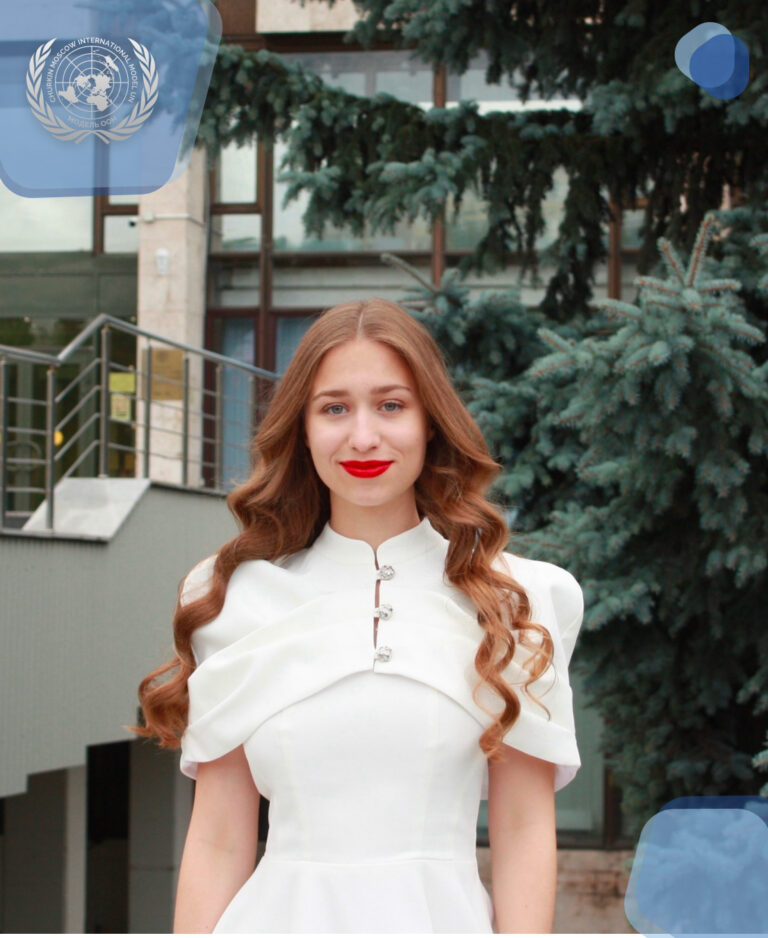
Dear delegates,
It is a great pleasure for me to welcome you to our committee. The agenda is devoted to a rather sensitive, yet nonetheless relevant topic. The issue of involving children in criminal structures requires deep legal analysis and prompt actions. The employment of international machinery herein leads to its resolution.
I wish you success in preparing for the Model UN; and I am sure that you will demonstrate the highest level of diplomacy and tact.
Sincerely
Genrikh Valiev
Vice-President of the United Nations Office on Drugs and Crime (UNODC)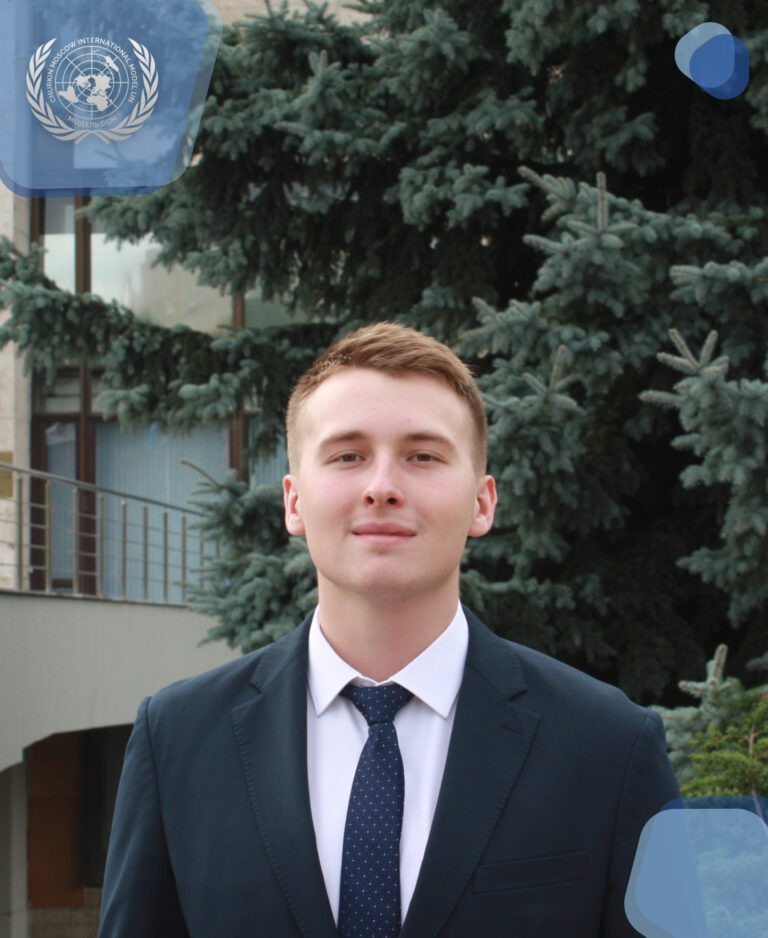
Our esteemed future delegates,
I extend a heartfelt welcome to all of you at the UNODC! Our Office stands in the way of criminality of many sorts and kinds. This year, you are going to deal with a particular aspect of the broader terrorism phenomenon, a marginalized and sometimes neglected topic – child recruitment by terrorist groups. There is still much the international community has to work on, and filling in the gaps will become your primary task during our sessions. Do not be afraid to think outside the box and be inventive, persistent, and proactive – C-MIMUN is the best opportunity to show what you are capable of.
I am looking forward to seeing you in action!
Sincerely,
UNODC Expert
Veronica Mordvinova
Dear delegates,
Welcome to the United Nations Office on Drugs and Crime (UNODC) at C-MIMUN 2027!
Our agenda – “Protecting the Rights of Children Recruited and Exploited by Terrorist Groups: Developing Comprehensive Programs for Rehabilitation, Reintegration, and Legal Assistance” – addresses one of the most sensitive and urgent challenges facing the international community today.
Behind every statistic stands a child whose childhood has been stolen by violence, manipulation, and exploitation. These children are not merely figures in international reports – they are individuals who deserve protection, justice, and, above all, a chance to rebuild their lives. Ensuring their rights and creating pathways toward a peaceful future is not simply a political responsibility, but a shared humanitarian duty.
Throughout our sessions, we will explore different national approaches, confront difficult legal and ethical questions, and, most importantly, work together to develop practical, realistic, and effective solutions. Our goal is not only to discuss existing challenges, but to find ways to transform international commitments into meaningful action.
I am looking forward to meeting the most passionate, open-minded, creative, and inspiring delegates – those who are not afraid to challenge conventional thinking, defend their ideas, listen to others, and seek common ground.
Let C-MIMUN 2027 become a place where diplomacy goes beyond speeches and resolutions. Together, we have an opportunity to make the world a better place – not just through words, but through actions.
I cannot wait to meet you all and see what we can achieve together!
With warm regards,
Valeria Filatova
Expert of the United Nations Office on Drugs and Crime (UNODC) C-MIMUN 2027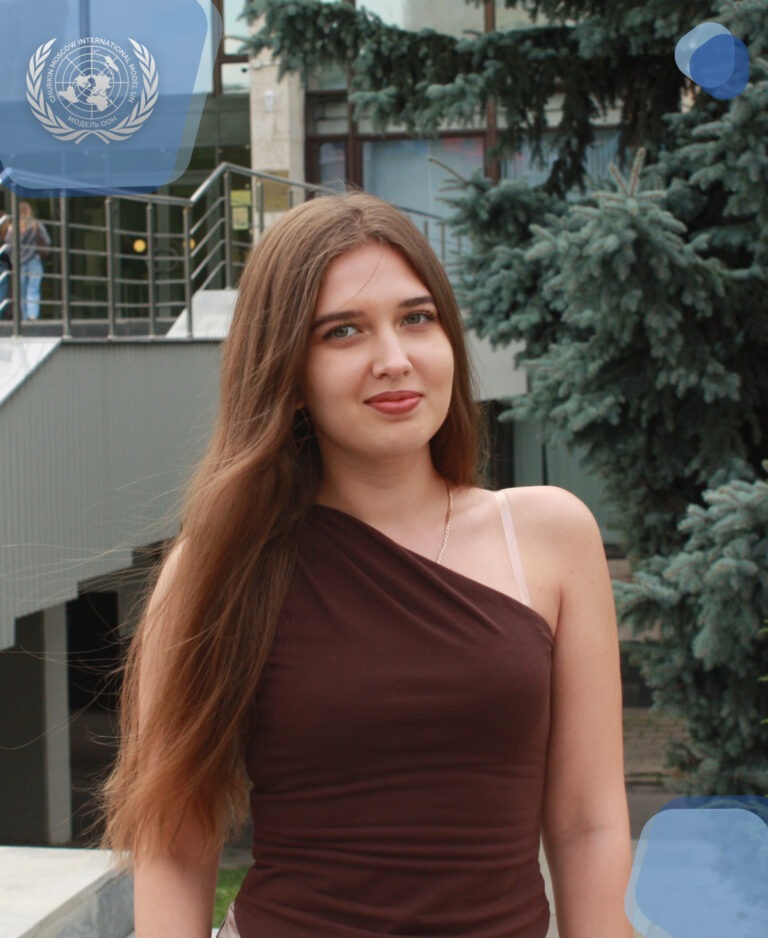
This year we have changed the registration system. Now, instead of an essay, your task is to provide detailed answers to the questions below.
Each question requires your own view on the issue written in 3-5 sentences.
We kindly remind you that there are NO wrong answers.
- Explain your choice of the committee.
- What is the main conflict/problem on the agenda? Why is it difficult to settle it with a single concession?
- Which solution would you suggest first? Despite possible criticism and the disadvantages of the measure, why would you still consider this solution necessary?
- A child recruited by a terrorist group might be not only a victim of coercion but also a participant in the commission of serious crimes. Where, in your opinion, should the line be drawn between protecting the rights of such a child and holding them accountable? In other words, what principles should be invoked when making a decision?
- Imagine that a state refuses to take back children who were previously recruited by terrorist groups. Is it justified from the perspective of international law? What role should UNODC play in promoting the repatriation and rehabilitation of such children?
Note: discouraged use of AI
A position paper is a concise expression of a particular state’s official position on the committee’s agenda. It aims to inform other delegates about the ideas your country adheres to and the measures it considers most effective. It further helps to form groups of countries with similar approaches in order to work together on a draft resolution.
Since delegates are limited in time, your position paper should be approximately 1.5–2 pages long. However, a shorter paper is not prohibited if it is enough to cover all the aspects. The exact time for speeches will be determined during the meeting; typically, it is about 2–5 minutes.
Your position paper should consist of the following parts:
Greeting. Every speech should begin with a formal greeting addressed to the Presidium of the Committee and fellow delegates.
Introduction. In three or four sentences, explain the relevance of the issue and briefly describe its impact on the international community. Avoid overly general statements: your introduction should lead directly to the Committee’s agenda.
Your country’s position on the issue in question and previous actions. Present the official position of the state or organization you represent. Describe the measures it has already taken and assess whether they have been successful. If certain policies have not achieved their objectives, explain the reasons. You may also refer to the country’s historical experience (if and insofar as relevant and brief) and its participation in relevant international initiatives. If your country does not support a particular UN approach, explain this position using official evidence.
Proposing solutions. Suggest specific and realistic measures to address the issue on the committee’s agenda. You may begin this section with a phrase such as: “Our delegation proposes the following measures…” The proposals should be consistent with your country’s official position, national interests, existing international law, and the Committee’s mandate. They should clearly explain what action should be taken, who should implement it, and how it could work in practice.
N.B. This part is crucial to any country position paper. It is extremely important you clearly articulate several concrete measures that are possible to implement in reality. Not something abstract (e.g., to maintain a dialogue between countries) but very specific and well-formulated policies. Also we strongly encourage you to make the most of your creativity: looking from an unusual angle may result in a truly effective solution.
Conclusion. Summarize your delegation’s position and express its willingness to cooperate with other states. You may conclude by expressing the hope that the international community will be able to address the issue through joint and coordinated efforts.
To write a position paper successfully, begin by searching materials reflecting the official position of the country or organization you represent. Your paper must be based on reliable primary sources, including:
– Official statements made by the country’s head of state, government officials, diplomats, and other authorized representatives;
– National legislation, strategies, policy documents, and official reports;
– Publications on the official websites of the country’s Ministry of Foreign Affairs and other government institutions;
– Relevant UN resolutions, reports, treaties, and official databases;
– Materials published by the United Nations Office on Drugs and Crime (UNODC), where relevant to the Committee’s agenda.
Media reports, academic publications, and analytical materials may help you understand the issue, but they should not replace official sources when you describe your country’s position. Make sure that all information is current, factually accurate, and directly related to the agenda. Keep a record of the sources you use so that you can verify your claims and answer questions during the committee session.
Write in the first-person plural, using the pronoun “we,” because you will be speaking on behalf of your country’s or organization’s delegation. Maintain
a formal and diplomatic tone. Avoid personal opinions, emotional language, accusations, and statements that contradict your delegation’s official policy.
We also point out that the use of artificial intelligence is prohibited at every stage of preparing your position paper. The position paper must reflect the delegate’s own research and analysis of official sources.
Once the position paper has been completed, carefully check its structure, factual accuracy, grammar, spelling, and diplomatic style. Ensure that every proposed measure follows logically from the official position of the country or organization you represent.
Country list: Representative: 1 Afghanistan 2 Algeria 3 Argentina 4 Bahrain 5 Bangladesh 6 Brazil 7 Canada 8 Chile 9 China (the People’s Republic of) 10 Colombia 11 Cuba 12 Egypt 13 France 14 Germany 15 Ghana 16 India 17 Indonesia 18 Iran (Islamic Republic of) 19 Iraq 20 Israel 21 Japan 22 Kazakhstan 23 Kenya 24 Libya 25 Malaysia 26 Mexico 27 Morocco 28 Mozambique 29 Nigeria 30 Pakistan 31 Paraguay 32 Peru 33 Philippines 34 Qatar 35 Republic of Korea 36 Russian Federation 37 Saudi Arabia 38 Somalia 39 South Africa 40 Spain 41 Sri Lanka 42 Syrian Arab Republic 43 Tajikistan 44 Thailand 45 Türkiye 46 Uganda 👑President 47 United Arab Emirates 48 United Kingdom of Great Britain and Northern Ireland 49 United States of America 50 Uruguay 51 Uzbekistan 52 Zimbabwe Observers: 1 African Union 2 European Union 3 International Criminal Police Organization (INTERPOL) 4 State of Palestine